

Where to live in Girona (by lifestyle)
Where to live in Girona (by lifestyle)
A local perspective to help you choose the right area for your life — not just the most popular one
When I moved to Girona six years ago, I didn’t expect to enjoy it this much.
My relationship with the city goes back much further. Around thirty years ago, my family moved here — and I did the opposite. I left for the United States, where I spent a decade living between New York and Los Angeles.
When I returned, I settled in Barcelona, my hometown. But Girona never quite left me. I kept finding reasons to come back — to visit my parents, to spend a few days here, to reconnect with something I couldn’t fully explain. Eventually, life brought me back in a more permanent way. Looking back, it has been one of the best decisions I’ve made.
Today, my daughter is growing up in a city that feels balanced, manageable, and quietly beautiful.
Girona has a bit of everything: cultural life, local commerce, a strong intellectual and creative environment — and something that is increasingly rare: ease of living.
Everything is close. In just a few minutes, you can leave the city behind — whether by bike, on foot, or simply to be in nature. And within half an hour, you reach the Costa Brava, with some of the most beautiful landscapes in the Mediterranean.
Girona is not overwhelming — but it’s complete. It has often been described as a small and delicate city, and once you spend time here, it’s easy to understand why.
And that is precisely why choosing the right area within the city matters more than it may seem at first.
Girona is compact, but each neighborhood offers a very different way of living. Some are vibrant and social; others are quieter and more residential. Some are visually striking but less practical for everyday life, while others may feel simpler at first, yet prove far more comfortable over time.
Most people begin their search guided by what they see — the beauty of a place, its atmosphere. But what ultimately defines the experience is something else entirely: how easy life becomes, day after day.
Barri Vell
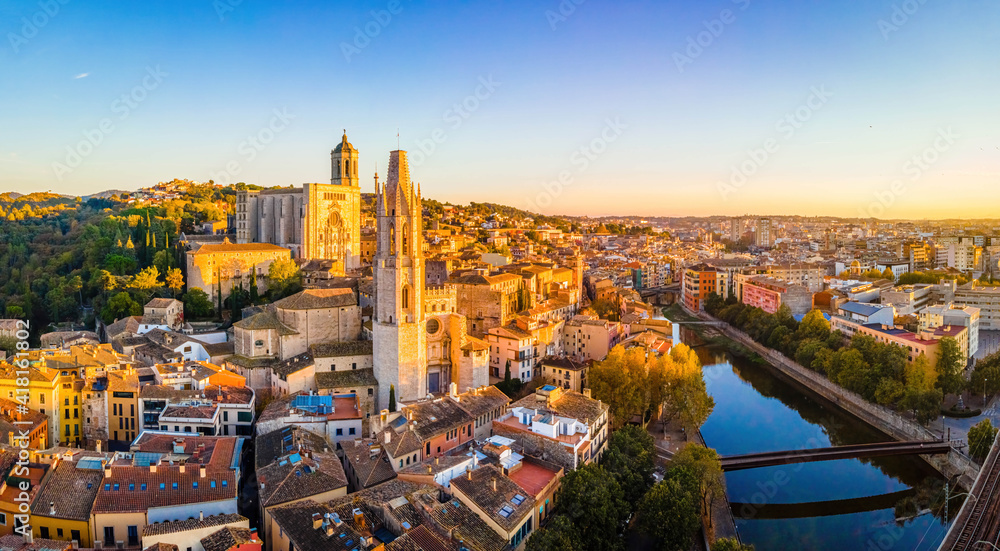
The Old Town is, without question, the most iconic part of Girona — and also the most nuanced.
There are, in reality, two distinct ways of living within it.
The upper part is quieter, especially in the evenings, and retains a more authentic, less commercial character. But it also comes with certain limitations: steep streets, narrow staircases, darker interiors, and a colder atmosphere in winter. For some, it can feel less comfortable on a daily basis.
The lower part, by contrast, is lively and full of activity. Restaurants, shops, and a constant flow of people give it a vibrant, social energy. Yet that same energy can also mean more noise, less privacy, and less calm.
Barri Vell is highly appreciated by international buyers. Locals, however, tend to see its constraints more clearly: the lack of parking, the absence of lifts in many buildings, the small staircases, and prices that often exceed those of other areas.
It is not a question of whether it is good or bad, but whether it aligns with how you want to live.
City Centre and Eixample Nord
The centre of Girona offers one of the most balanced ways of living in the city. Areas such as Jaume I, Sant Francesc, Plaça Catalunya or Plaça de la Constitució combine proximity, services and everyday comfort. Everything is within walking distance.
There are, of course, nuances. Some streets — particularly around Albareda — are more active at night, which may not suit those looking for a quieter environment.
Just beyond, Eixample Nord is often a favourite among locals. Built largely in the 1970s and 80s, it offers spacious apartments and a well-established urban fabric, full of everyday life. It is not the most visually striking part of the city, but it is, for many, one of the easiest places to live.
Just outside the walls: Sant Pere, Pedreres and Sant Daniel
These areas sit at the edge of the Old Town and offer a subtle but meaningful shift in atmosphere. There is more space, more light, and a certain distance from the intensity of the historic centre — while still being only a few minutes away on foot.
Sant Daniel, in particular, feels almost like a village within the city. Surrounded by nature, with direct access to Les Gavarres, it offers a way of living that is both close to Girona and gently removed from it. Construction here has been limited, which helps preserve its character.
At the same time, the hillside between Sant Daniel and Montjuïc developed significantly from the 1970s onwards, often through self-built housing. This has created a more irregular urban structure, with steep streets and a mix of construction qualities.
Some properties enjoy exceptional views — even towards the cathedral — which can influence pricing. But in these areas, it is especially important to look carefully at how buildings were constructed, including materials and structural aspects. As in many parts of Spain from that period, elements such as aluminosis may need to be considered, although not all properties are affected.
Devesa
Next to the city’s largest park, Devesa offers a different rhythm. Buildings from the 1990s, practical layouts, and often shared outdoor spaces make it a comfortable and functional choice for everyday living.
Montilivi, Palau and Montjuïc
Montilivi presents a mix of apartments and houses, combining older buildings with more recent developments. It is a balanced, residential area.
As you move upwards towards Palau, the environment becomes quieter and more exclusive, with prices reflecting that demand. Palau remains one of the most sought-after residential areas in Girona.
Montjuïc, on the other hand, stands out for its views. Houses along the hillside overlook the city, offering a very particular lifestyle. Supply is limited, and the setting is unique.
Parc del Migdia, Eixample Sud and Pericot
This part of the city represents a more recent phase of Girona’s development, largely from the late 1990s and early 2000s. At its centre, Parc del Migdia brings openness and a sense of space that contrasts with older areas.
The neighborhood combines schools, services, cafés and everyday life, with buildings that tend to be brighter and more functional.
Yet within this more contemporary structure, there are still smaller streets and older pockets — particularly between Emili Grahit, Químics and Pericot — where one finds modest houses, patios and a more intimate scale.
Pericot continues this same balance: residential, stable, and quietly practical. For many locals, this entire area represents one of the most balanced ways of living in Girona.
Across the river: Fontajau
Fontajau offers calm, green surroundings and a mix of housing options. The river, however, creates a certain psychological distance for some international buyers, even though the centre remains close.
Sant Narcís and Santa Eugènia
Often overlooked, these neighborhoods hold a strong local identity.
Sant Narcís, with its small houses, central square and active community life, offers a sense of belonging that is increasingly rare. Santa Eugènia, closer to the train station, provides more accessible options while still being within walking distance of the centre.
For those who value authenticity over image, both areas can be worth considering.
Where should you live?
There is no single answer.
The right choice depends on how you live, what you need, and what you value. Most people begin with an image. But the right decision comes from understanding daily life.
A simple way to think about it:
Character — Barri Vell
Practical living — Centre, Eixample Nord
Balance — Parc del Migdia, Pericot
Residential calm — Montilivi, Palau
Views — Montjuïc
Nature — Sant Daniel
More accessible options — Sant Narcís, Santa Eugènia
Thinking about buying in Girona?
Choosing the right area is only the first step. At Glòria Martí Agency, we help international and local buyers understand the market, compare neighbourhoods and assess each property with independent criteria before moving forward.
The Old Town offers charm and atmosphere, but areas outside the centre often provide more comfort, space and easier day-to-day living.
Residential areas such as Montilivi, Palau, or parts of Sant Daniel tend to be quieter, while Barri Vell and some central streets are more active.
Yes, Girona is increasingly popular among international buyers and expats thanks to its quality of life, accessibility, and proximity to both nature and the coast.
There is no single best area. It depends on your lifestyle. Barri Vell offers character, Eixample Nord is practical, and areas like Montilivi or Parc del Migdia provide a more balanced residential environment.